ECIU University in the making: How we support students through learner guidance
A constantly growing community of learners and experts across 12 member institutions, ECIU University welcomes students from Europe and beyond – all with different backgrounds, perspectives and goals. And while such diversity is the foundation of ECIU University, it also means there are diverse needs to be addressed. Which is the main objective of Work Package 2 (WP2), the team responsible for providing learner guidance support within the Alliance.
WP2 guides students across institutions, disciplines and various stages of their learning journeys through ECIU University courses and learning opportunities. As they co-create unique digital tools, develop a feedback loop within the community, and approach learner support from new angles, the team hopes to create a personalised experience for everyone – with students themselves playing a leading role in the process.
We sat down with Timothy James Marshall, the WP2 lead and project advisor at the University of Stavanger, and Henri Pirkkalainen, a task lead for learner guidance within the package and Professor of Knowledge Management (Tampere University), to discuss the team’s journey since 2022, some of its biggest projects and how ECIU University is transforming learner guidance.
Question: Work Package 2 is all about learner guidance support, but what does it mean in the context of ECIU University? What would you say is the WP’s goal?
Timothy Marshall: I’d say WP2’s mission is to provide a good balance between human and digital support for our students. Our alliance consists of 12 universities in 12 countries. They come from different backgrounds and disciplines and are all at different stages of their learning journeys. This creates a very diverse student body, which is great – but it means that students’ needs are incredibly diverse as well.
Where one student will prefer digital support, another will want to talk to a real human being; where one requires less guidance, another requires more. All learners are different, and it’s our job to make sure their needs are covered; to help them navigate ECIU University resources with autonomy.
Q: And how exactly does WP2 guide students through their learning journeys?
Timothy: While we’ve done many things since 2022, one of our main projects is the motivation scan. It’s a short quiz students can take on the Engage platform to understand which courses are best for them. Based on their answers, they’ll get personalised suggestions which will help them decide what to apply for.
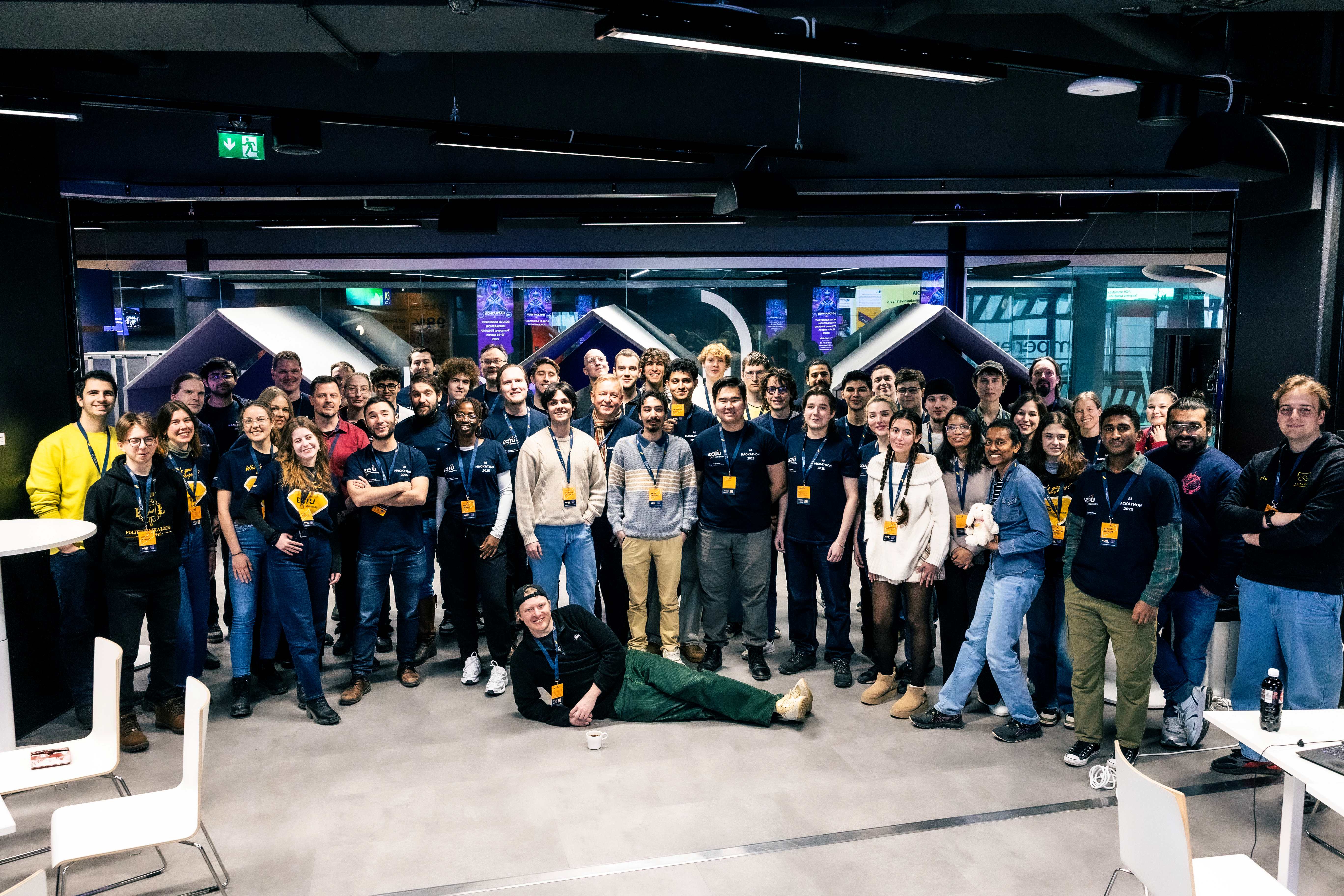
Following a focus group with students, we also decided to take things further by developing an AI learner guidance assistant – a project we piloted during the AI Hackathon in Tampere in March 2025. Students offered lots of incredible ideas in a very short time, and we’re definitely going to incorporate some of them into the flow.
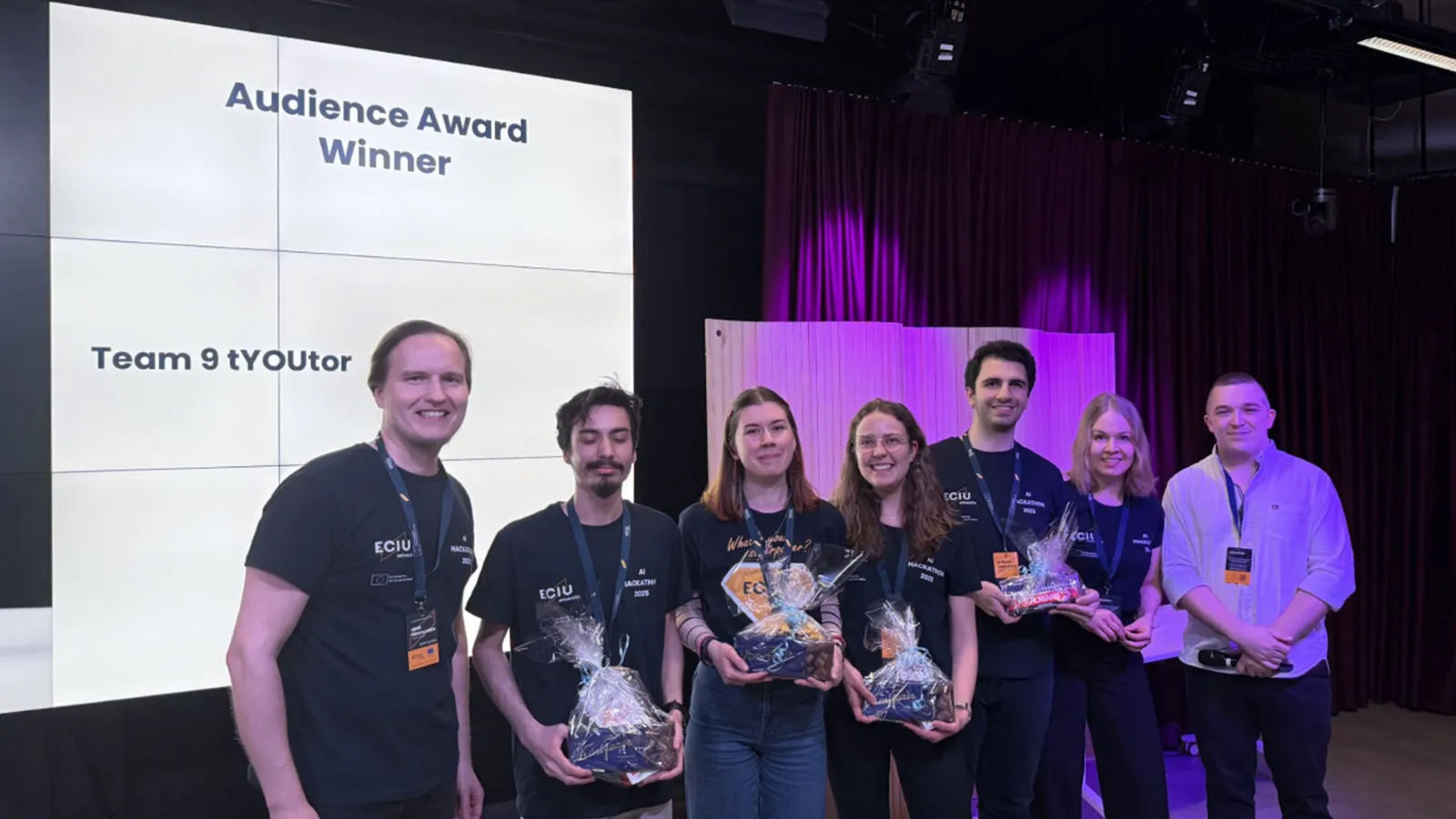
The work on the chatbot, which is being developed with WP6, will continue into the next ECIU University phase and, hopefully, improve the learner experience further.
Q: And it’s far from all that is being done in terms of learner support guidance, isn’t it?
Henri Pirkkaleinen: Of course. Some of our other projects include supporting the course portfolio, developing the competence taxonomy in collaboration with WP4 and working on the competence passport – a digital tool that tracks skills acquired during ECIU University courses, stores credentials and certifications, and offers personalised learning guidance.
We have also focused on supporting flexible learning pathways and enabling digital infrastructures for interconnected education models across Europe.
Additionally, the emergence of large language models during the project introduced an entirely new and highly interesting dimension. We began exploring how AI-based support could help learners navigate the learning process and make better use of available opportunities. During the AI Hackathon, we got to explore these ideas in a very concrete way – turning learners into co-creators of the Engage platform.
Q: You mentioned Hackathon and how it paves the way for WP2 initiatives like the AI chatbot. With two Hackathons behind and, hopefully, more ahead, what has been your biggest takeaway from the event?
Timothy: While hackathons have different focuses and outcomes each time, they are driven by the idea of engagement through student co-creation, and that’s what makes it work so well.
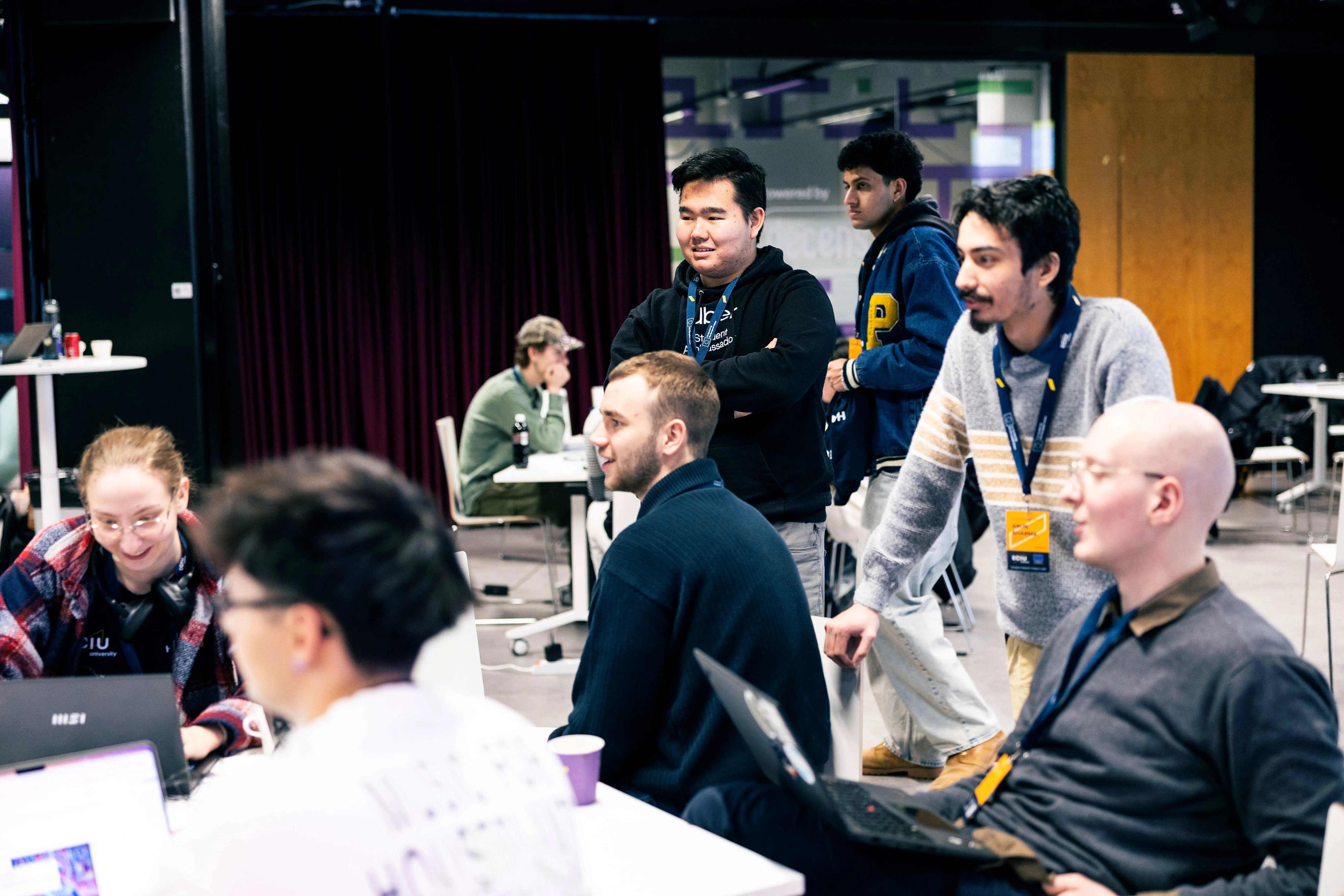
This April, the third part of our team, the Task 2.3 group at KTU, held a hackathon called ‘Ignite’ to design and prototype tools that encourage broader, sustained engagement with ELOs. The results are important for shaping future learning guidance development work in the next phase. Meanwhile, what we’ve all done together during the recent Hackathon will have a huge impact on our AI chatbot.
Our work is all about events like Hackathon, because we don’t want to simply tell the students what kind of learner guidance and experience they need. We’re not saying that we know better than them. What we’re saying is – we want to work with you. Tell us what it is you need, and we will co-create towards this goal together. And hopefully, we’ll keep creating things together.
Q: Speaking of opportunities, what is next for Work Package 2 – and what are the plans for learner guidance support at ECIU University?
Henri: I believe that, particularly in the area of learner guidance, we are still at a very early stage. Although a strong foundation has been developed, we have only scratched the surface – there is much more potential to explore and develop further.
For example, while AI support is still in an early piloting phase within the project, it holds significant promise. Looking ahead, learners could have access to highly personalised AI-based tutors that not only support course selection but also guide their broader professional development.
Overall, I see multiple possible directions for future development, and this is exactly what makes the next phase of the project particularly exciting.
Q: We talked a lot about community, but how about the people behind it? What impact has being part of ECIU University had on you – and your path?
Henri: This has been a highly developmental experience for me, both professionally and personally.
Micro-credentials have become a central theme in my studies, while being part of WP2 has strengthened both my and my team’s perspectives on data governance and emerging technologies. The development of practical AI solutions has also had a huge impact on our doctoral students’ research [at Tampere University].
Timothy: For me, this has also been quite a journey – and a great opportunity. During my time here, in addition to leading the work package, I have developed, taught and attended courses as a student. I have also been able to combine this with research work, especially in the area of challenge-based learning which is a key pillar of ECIU University.
I have been lucky to collaborate with many people from different backgrounds and countries who all bring their own unique perspectives to the table. It was incredibly enriching.
And the best thing is that there are always things to experience. At ECIU University, you can always find a way to be part of the community – no matter which stage of your journey you are at.
AI Hackathon photos: Jonne Rennval.
Interview by: Anastasiya Bukhtiarova

ECIU
The European Consortium of Innovative Universities is a network of universities who are united by a common profile, by shared beliefs and interests and mutual trust.All ECIU universities have strengths in engineering and social sciences.

.webp)