Harmonizing Skills Assessment Based on the ESCO Framework in Engineering Education
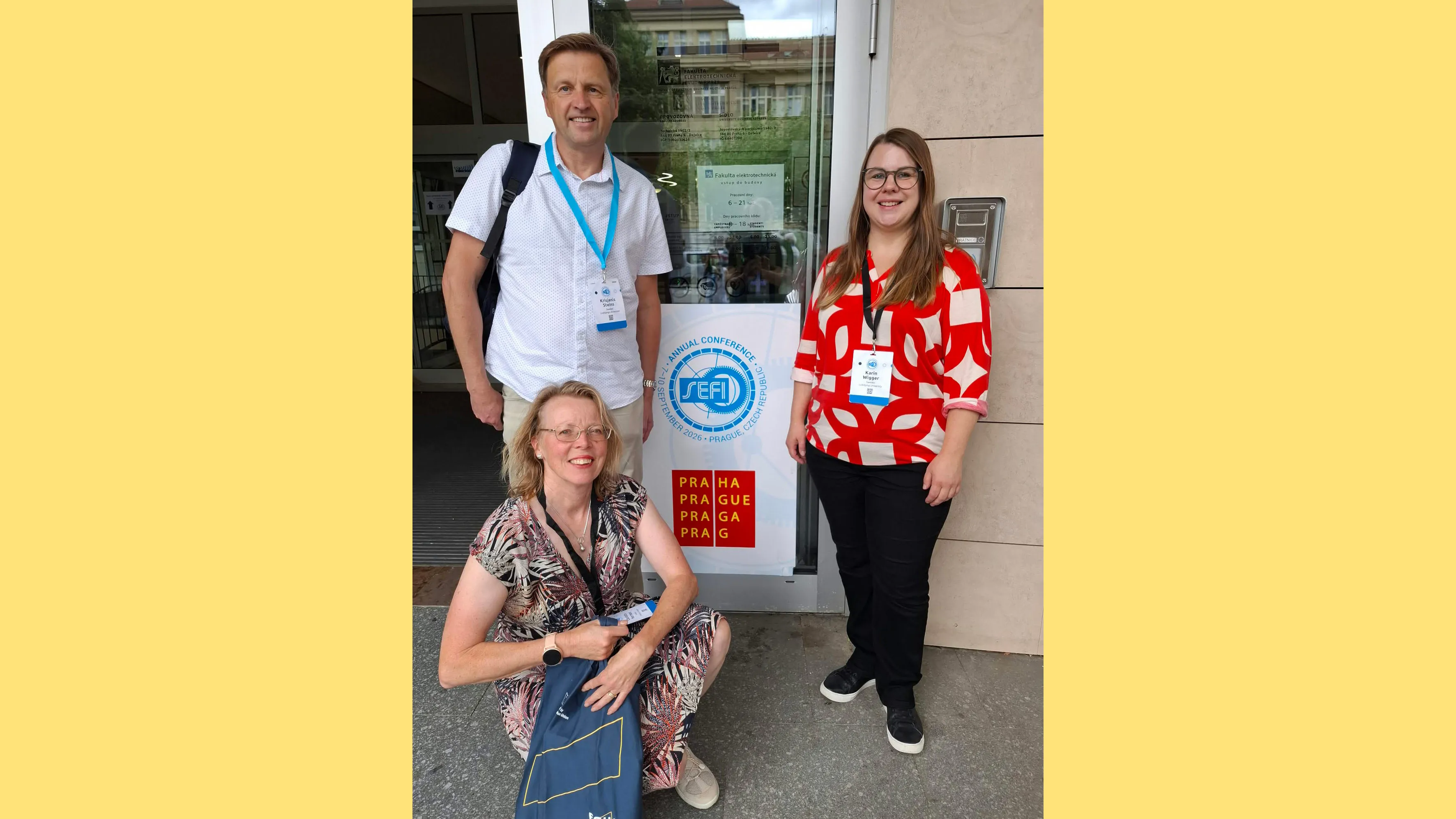
"Harmonizing Skills Assessment Based on the ESCO Framework in Engineering Education" is the title of a paper, developed under the EU co-funded project JUMP and presented at the International SEFI Conference 2026, in Prague, Check Republic, in front of educators, researchers, industry leaders, and changemakers.
This paper addresses the challenge of operationalising competence-based education in European higher education through the European Skills, Competences, Qualifications and Occupations (ESCO) framework:
- European higher education increasingly relies on competence-based learning outcomes and aims towards harmonizing education through common frameworks.
- The ESCO framework provides a common language and systematization of skills. It harmonizes learning outcomes associated with joint education initiatives.
- Translating broad competence frameworks into assessable educational practice is complex and remains problematic, because there is a lack of concrete measurements on how to assess competencies
The goal of JUMP project is a European joint minor programme, built from courses that are combined into learning pathways. Through the ESCO skills, students gain an overview of what the international learning opportunities are intended to teach them. A matrix was developed for translating ESCO skills into assessable practices. The basis for the illustration is the course 799g60 InGenious Sustainable Cities and Communities, offered by Linköping University, Sweden.
Three steps process was described:
- Identify ESCO skills related to the course goals - By mapping each learning outcome to appropriate ESCO competences, teachers can develop a structured overview of the skills students are expected to develop during the course.
- Determine how skills are used in the course - Clarifying how each skill is used in the course is important for transparency.
- Create a formative assessment matrix - Such a matrix specifies the learning outcomes and related skills, the requirements for passing the course, the criteria for achieving higher grades, and the course activities where these skills are demonstrated
Assessment Frameworks comparison was also presented.
The benefits for the universities are:
- Our framework makes ESCO skills more useful and meaningful
- Supports curriculum design across distributed programs
- Improves consistency among European HEIs
- Enhances student employability and competence recognition
All findings and details are reported in the JUMP Deliverable D2.2.2 "Extended and shared overarching learning outcomes for the whole CBL Minor".

Linköping University
Sweden
Linköping University (LiU) is a top-ranked Swedish university, recognised globally for its interdisciplinary research and innovative teaching. From the start, LiU has pioneered collaboration with industry and society to address real-world challenges. It leads in fields like telecommunications, healthcare, energy technology, and materials science.
Hosting major European infrastructures such as the AI Factory MIMER and the supercomputer ARRHENIUS, LiU plays a key role in driving innovation. With 45,000 students and staff, Linköping University offers a dynamic environment where creativity, excellence, and collaboration thrive.