JUMP project - successful full implementation and evaluation of Pilot 1

The JUMP project has progressed from design to full Pilot 1 implementation, providing concrete evidence of the viability and structuring potential of the proposed educational model.
Across Pilot 1 (1A and 1B), 24 Educational Learning Opportunities (ELOs) were implemented, including 17 Micro-Modules and 6 CBL projects, exceeding all contractual targets. Participation levels significantly surpassed expectations. A total of 496 students were enrolled (315 in Micro-Modules and 181 in CBL projects), already exceeding the cumulative KPIs set for the entire project.
The portfolio evolved from a calibration phase (Pilot 1A) to an expansion phase (Pilot 1B), with increased development of new ELOs, stronger presence of CBL formats, and greater involvement of external stakeholders. A strong teaching community was also mobilised, with 33 academic and non-academic staff involved, doubling the initial KPI target. The results achieved have been detailed and analysed in depth and published on the Erasmus+ results platform.
In parallel, WP3 strengthened its monitoring and evaluation approach. Questionnaires and follow-up tools were deployed to collect feedback from students and staff, focusing not only on the quality of individual learning activities but also on the overall learning experience and coherence of emerging learning pathways. These data were analysed and integrated into an intermediary report, providing evidence-based recommendations for the next pilot phase (Pilot 2), particularly regarding pathway structuration and student engagement.
INSA Toulouse is the WP3 leader, while all partners actively contributed to the design, implementation and evaluation of the pilots. Coordination activities played a key role in these achievements. INSA Toulouse organized several workshops, enabling teaching teams to present their ELOs, identify complementarities, and explore co-design and co-teaching opportunities. These exchanges fostered the emergence of a shared pedagogical framework and strengthened cross institution collaboration.
From a qualitative perspective, Pilot 1 confirms the relevance of the pedagogical approach. The implemented ELOs align with the JUMP framework (innovation, entrepreneurship, sustainability, interdisciplinarity), while allowing institutional flexibility.
The emergence of thematic clusters and increased cross-institution collaboration further support the structuring of the CBL Minor. At the same time, Pilot 1 provided key insights for improvement, particularly regarding pathway coherence, cross-institution participation support, and the need for a shared evaluation framework, which will be addressed in Pilot 2.
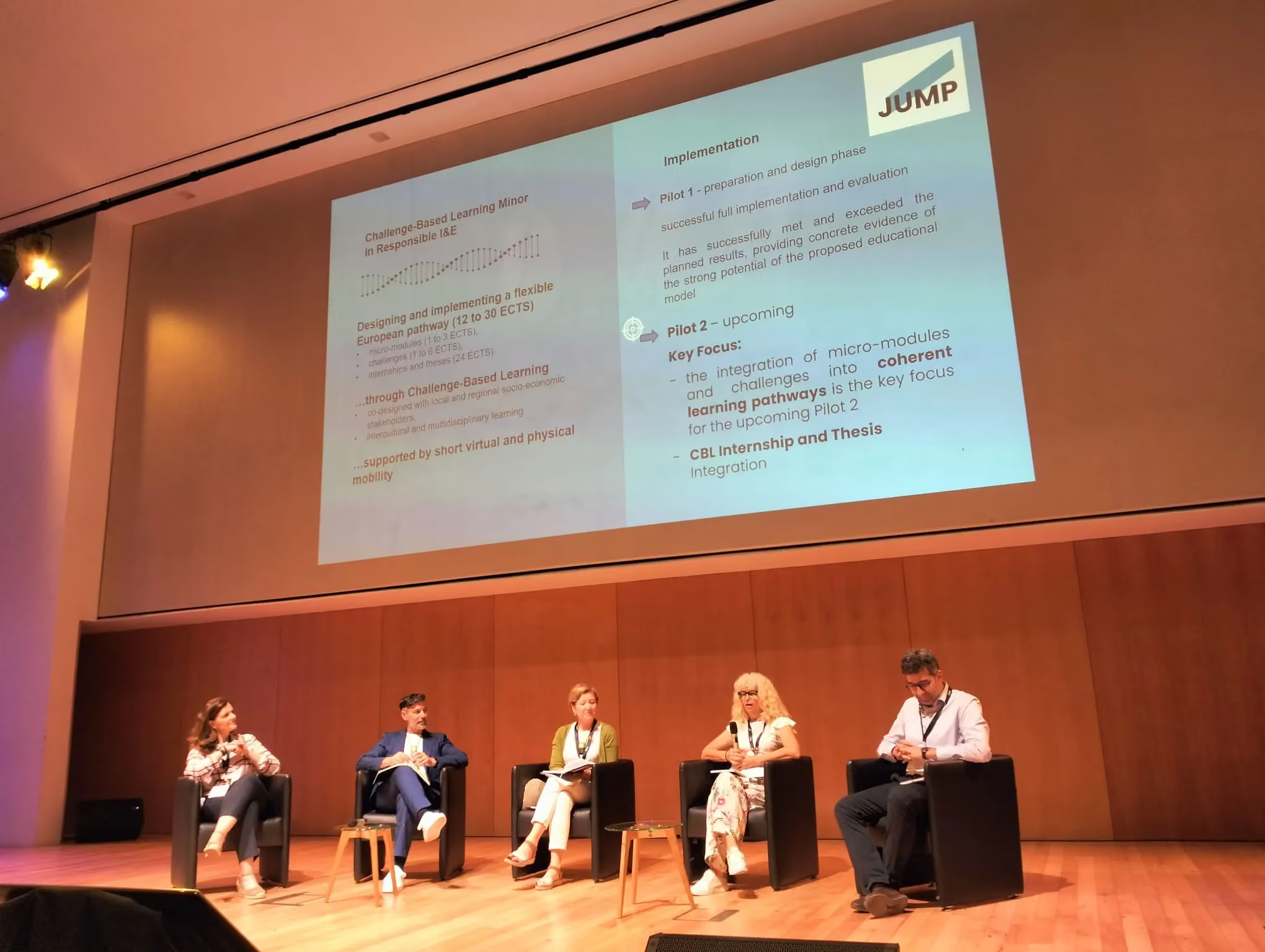
Pilot 1 has successfully met and exceeded the planned results, providing robust evidence to support the continuation and scaling of activities in Pilot 2.
The implementation phase highlighted the need to strengthen the integration of micro-modules and challenges into coherent learning pathways, which is now a key focus for Pilot 2.
© header-picture: UniTrento ph. Federico Nardelli

University of Trento
Italy
Located in the heart of the Alps, the University of Trento is internationally recognised for its commitment to quality, innovation and global engagement in teaching, research and services. With over 17,000 students and 70 bachelor’s and master's degree programmes across 14 departments and centres, UniTrento offers a dynamic and inclusive environment focused on excellent programmes of study and student well-being.
The university is dedicated to nurturing individuals with robust skills, critical thinking, and an international perspective, strongly promoting interdisciplinary collaboration and investing in knowledge as a shared resource to create substantial cultural, scientific, and social impact.

.jpg)